Thinking about starting an online business? See why eBay remains one of the best places to start selling, and what beginners should know first.
If you’re looking for an additional source of income, selling online through a popular marketplace like eBay can be a beginner-friendly place to consider. Selling online gives you the potential to grow into a profitable side business, or even a main revenue stream. But getting there takes time, patience, and a willingness to learn.
U.S. retail ecommerce sales reached $316.13 billion in the fourth quarter of 2025, or 16.6% of total retail sales, according to the U.S. Census Bureau. For beginners, deciding which platform to use, what to sell, and how to navigate the rules can be overwhelming enough to prevent them from starting.
Although the obstacles range from financial and technical to legal, the biggest barrier is the fear of making an expensive mistake. Many are afraid to invest time, effort, and money in their business without knowing whether it will work, or whether they might be manipulated or scammed in the process.
Choosing the right marketplace may be one of the most important decisions you’ll make. eBay connects buyers and sellers across more than 190 markets, and it’s often the first place people land while searching for beginners’ tips for selling online. That’s where you might come across the term “dropshipping,” a model in which you sell products without holding inventory, which is covered further in Yaballe’s eBay dropshipping guide.
Why so many people never start
Fear of losing money arises often in social media conversations, where new sellers admit they’re afraid to start because they worry it will fail. Information overload adds to the problem: YouTube, Reddit, and ecommerce forums are full of conflicting advice, and self-proclaimed gurus promising fast results don’t make it easier to know who to trust.
Dropshipping carries its own credibility problem. Years of “get rich quick” marketing, along with comparisons to pyramid schemes, have led some beginners to raise an eyebrow at the model altogether. In contrast, others worry about having enough capital, picking the wrong products or suppliers, or spending money before they know they can make a sale. While knowledge is power, piling on too much of it before making a single sale can leave beginners feeling hesitant, leading to analysis paralysis before the first listing goes live.
Many beginners carry legitimate concerns: feeling underfunded, unsure of what they’re doing, and worried that a costly business decision could sink things before they’ve even embarked. That’s why selecting a beginner-friendly marketplace matters so much, giving you room to find out whether selling online is right for you without having to master every part of ecommerce on day one.
In case you were wondering, eBay isn’t the only option: For example, Shopify gives you more control over your own store and brand, while eBay’s built-in buyer traffic can make it easier to get started. You can read more about which of the platforms is safer for beginners here.
Selling on eBay for beginners: Why it remains a practical choice
Existing customer traffic
When you set up your own online store, you gain more control over your brand and the customer experience, but you’re also responsible for attracting every visitor through SEO, social media, or paid advertising. On eBay, buyers are already searching for products: the platform processed $79.6 billion in gross merchandise volume in 2025, up 7% year over year, and reported 135 million active buyers at year-end. That existing customer base gives beginners a way to test products and pricing without first having to generate traffic for an unfamiliar website.
Lower financial risk
Building an audience from scratch often means paying third parties to attract customers before you know whether the spend is worth it; whereas selling where buyers are already searching lets you test demand with a more controlled outlay. Starting with a minimum spend and scaling from there also lets you discover which products attract real interest, whether margins hold up once fees and shipping are factored in, and what’s worth expanding, adjusting, or dropping before you invest more heavily
Focus on the fundamentals first
As a beginner, you might be new to product research, listings, pricing, fulfillment, and customer service. Starting on one marketplace narrows the learning curve, letting you get comfortable with those fundamentals before building a website or learning every marketing channel.
A trusted marketplace
Selling through a marketplace buyers already recognize removes some of that uncertainty. You still need to build your own reputation and follow eBay’s policies, but that’s a less steep climb than starting entirely on your own.
What beginners should know before they start selling on eBay
Strong demand doesn’t guarantee a profitable product once supplier costs, eBay’s fees , shipping, and returns are factored in. eBay’s selling fees vary by category and seller status. On eBay.com, final-value fees generally range from 2.5% to 15.3% of the total sale amount, plus a per-order fee of $0.30 for orders up to $10 or $0.40 for orders above $10.
With dropshipping, sellers depend on suppliers for more than getting orders out the door. If a supplier runs out of stock, raises prices, ships late, or lists inaccurate details, customers need to contact the seller, and price changes can erase an expected margin overnight. Choosing a reliable supplier and watching their prices, stock, and shipping times pays off early.
New sellers also need to understand eBay’s rules, which include policies on intellectual property and counterfeit goods, including the Verified Rights Owner (VeRO) program for trademark and copyright misuse. Compliance also means understanding tax obligations and tracking tariff and regulatory changes.
Startup costs deserve the same realistic look. Dropshipping isn’t a get-rich-quick model, and it isn’t free to start either. If you’re searching for the best business to start with no money, it’s worth distinguishing between not buying inventory upfront and having no startup costs. A reasonable lean testing budget is around $100–$500, assuming you begin with manual listings, stay within eBay’s zero-insertion-fee allowance, order only a few product samples, and keep advertising limited. A more serious three-month testing budget may reach approximately $1,000–$3,000 once multiple samples, product research or automation tools, refunds, and paid promotion are included.
These are planning estimates rather than fixed eBay charges: eBay’s actual fees vary by category, listing volume, seller account, and optional services, while supplier, sample, software, and advertising costs vary by business model.
Therefore, none of these challenges are unique to eBay but are part of learning any ecommerce business.
Why having the right support makes a difference
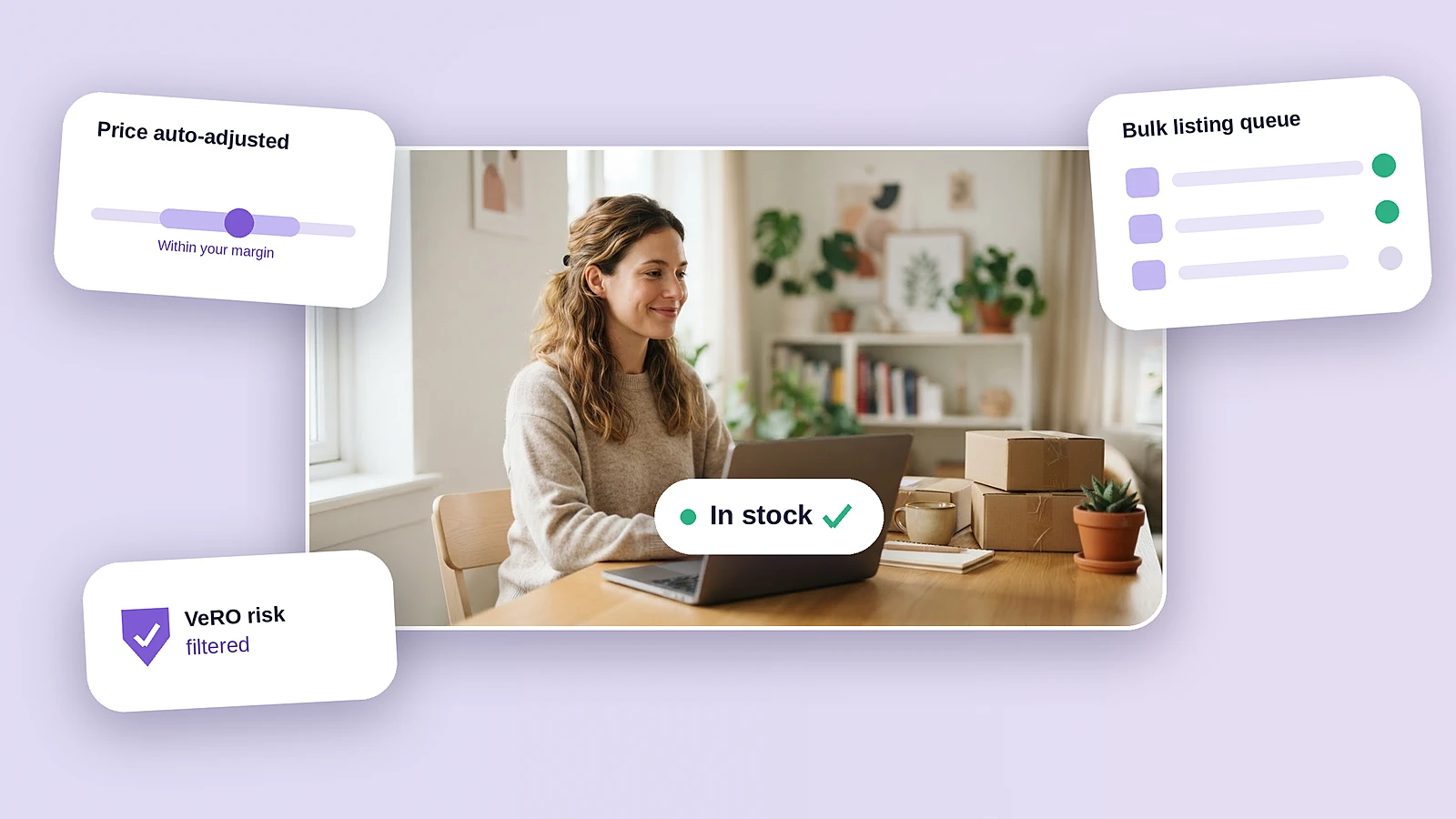
As beginners gain confidence and add products, an eBay business develops more moving parts: product research, listings, pricing, inventory monitoring, fulfillment, tracking, and customer support. Simple tasks with a handful of listings become harder to coordinate as the store grows, especially when they’re spread across separate tools.
This is where a system like Yaballe comes in, bringing those tasks into a single connected system rather than leaving sellers to manage each piece separately. The underlying data reflects years of eBay seller activity and real dropshipping experience, while decisions about pricing, margins, and policy compliance stay with the seller.
Is selling on eBay worth it for beginners in 2026?
Many people who hesitate to start selling on eBay are held back by uncertainty, not the marketplace itself: not knowing whether they’re making the right call, or waiting to find the perfect business instead of a good place to start learning. No marketplace can remove that uncertainty entirely.
What eBay offers beginners instead is a way to test that decision against real demand rather than guesswork: an existing base of buyers, live sales data, and room to build confidence as they learn. That combination is still hard to match, which is why eBay remains one of the strongest places to start selling in 2026.
None of this makes selling on eBay effortless. It still takes patience and consistency. But beginners don’t have to learn all of it alone: a system like Yaballe is there to help manage the added complexity as a store grows, making a marketplace with both an audience and that support already built in a business-savvy place to enter.